The Power of a Lion's Roar

Chris Isidore
| 20-03-2026
 · Animal Team
At dusk, when the landscape begins to quiet, a deep, thunder-like sound rolls across the open land. It is not just noise—it is a signal, a warning, and a message.
The lion's roar is one of the most powerful sounds in the natural world, capable of traveling astonishing distances and carrying meaning far beyond what human ears might first perceive.
How Loud Is a Lion's Roar?
A lion's roar is not only iconic—it is scientifically impressive. Studies show that a lion's roar can reach about 114 decibels at close range, which is comparable to very loud machinery.
This level of sound is powerful enough to be felt as vibrations when heard nearby. The intensity comes from the lion's unique vocal anatomy. Unlike many animals, lions have a specialized larynx and flexible vocal structures that allow them to produce deep, resonant sounds with relatively low effort.
Why Fewer Toys, Gadgets, and Accessories Can Lead to Calmer Pets and Clearer Homes
Discover How These Mountain Dwellers Survive and Thrive Year-Round
Don’t Blame Lions for Being Reckless! Discover How Every Hunt Is a Calculated Strategy That Keeps Them Alive!
The simple routine that keeps your home fresh and your cat happy
Fascinating Behaviors and Surprising Roles of Prairie Dog Colonies.
How and why antlers grow, fall off, and shape deer life
Even more important is the frequency. A lion's roar operates at low frequencies, typically between about 36 and 81 Hz, which helps the sound travel farther without fading quickly.
How Far Can the Roar Travel?
Under ideal conditions, a lion's roar can be heard from as far as 5 miles (8 kilometers) away.
This remarkable distance is not constant—it depends on several environmental factors:
1. Weather conditions
Cool, still air allows sound to travel farther, especially at night or early morning.
2. Terrain
Open landscapes enable the roar to spread widely, while obstacles like hills or dense vegetation reduce its reach.
3. Background noise
Quieter surroundings make the roar easier to detect over long distances.
Because of these factors, the same roar may travel much farther on a calm night than during a windy day.
Why Lions Roar: More Than Just Noise
The roar is not random—it is a carefully used communication tool. Lions rely on sound to interact across large distances where visual contact is impossible.
1. Marking territory
A roar signals presence and strength, warning other lions to stay away.
2. Locating pride members
Lions use roaring to reconnect with group members when separated.
3. Displaying dominance
The depth and power of the roar can communicate size and condition to rivals.
4. Coordinating movement
Roars help organize group activity, especially across large territories.
In essence, the roar acts like a long-distance communication system, carrying both identity and intention.
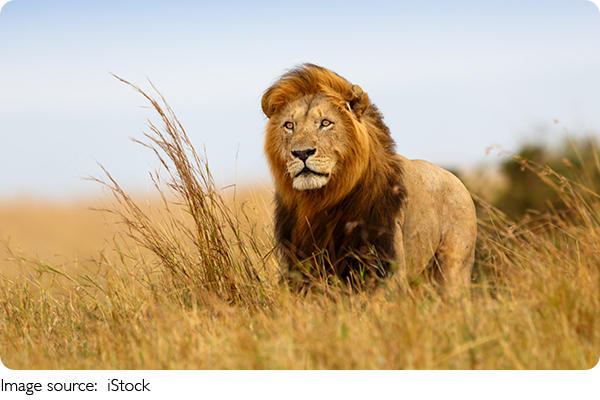
The Science Behind the Distance
What makes a lion's roar travel so far is not just loudness, but physics. Low-frequency sounds lose less energy as they move through the air, allowing them to maintain strength over long distances.
Additionally, atmospheric conditions can bend sound waves. For example, cooler air near the ground can help “trap” sound, allowing it to travel farther than expected.
The lion's anatomy works perfectly with these physical principles. Its large lungs generate strong airflow, while its vocal folds are designed to maximize resonance.
Together, these features create a sound that is both powerful and efficient—ideal for communication across vast spaces.
A Sound That Defines the Landscape
In the wild, a lion's roar is more than just a call—it shapes behavior. Other animals may freeze, move away, or become alert when they hear it. Even distant listeners can interpret the message: a powerful presence is nearby.
For humans, hearing a lion's roar—whether close or far—often creates a sense of awe. It reminds us that sound can carry meaning far beyond words.
In the end, the lion's roar is not simply about volume. It is about reach, purpose, and connection. Across miles of open land, a single sound can define territory, maintain relationships, and communicate strength. It is a powerful example of how nature uses sound not just to be heard—but to be understood.